

Are you leaving free capital on the table?
This week, I’m breaking down how founders can leverage non-dilutive funding sources; discussing key considerations on raising capital through a mixture of equity, debt, and grants; and going over other business incentives to fuel runway and retain as much ownership as possible.
Let’s dive in!
First things first – what is non-dilutive finding?
Non-dilutive funding is a strategic advantage for founders who want to scale without sacrificing equity. It’s inevitable that most companies will need capital to grow or to fuel growth efforts at a faster pace or timeline. Many companies require multiple funding rounds leaving the founders and pre-seed/seed stage investors open to dilution at each round. A key success factor for companies in this stage is how to stretch their dollar to maximize value and have the right mix of equity and non-dilutive sources to allow the company to meet its objectives at the lowest possible cost to the company and existing investors.
Beyond the Pitch: Your Capital Stack as a Competitive Advantage
Winning at non-dilutive funding is about more than just filling out forms; it’s about understanding the full picture.
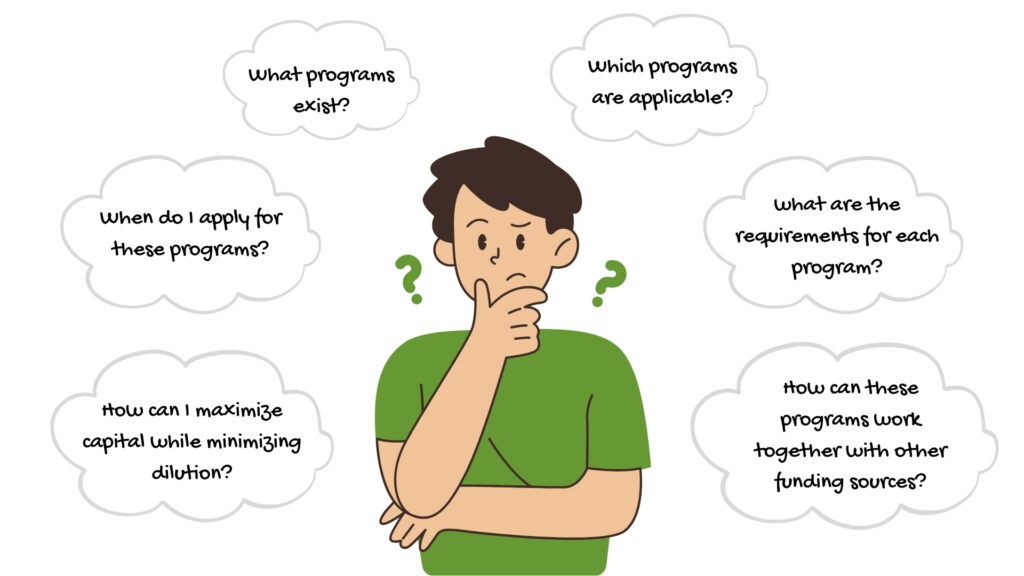
Common Non-Dilutive Funding Concerns
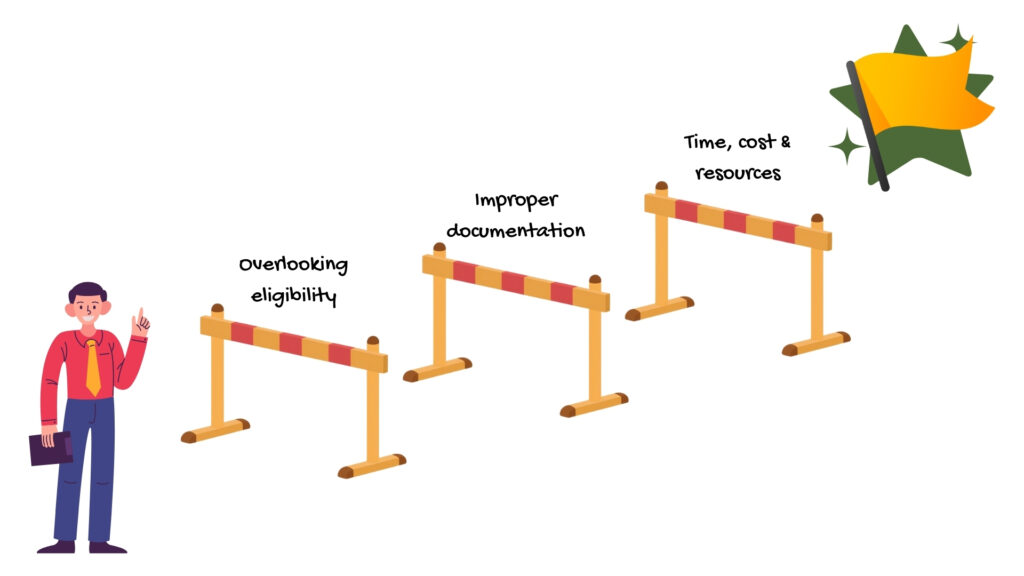
- Overlooking Eligibility: Some founders might ignore SR&ED, and other programs, assuming they’re not a fit, the requirements are too complex, fear of audit, or maybe they had a previous bad experience. In reality, even early very early-stage companies can benefit if they’re performing R&D activities in Canada. Proper professional assistance, preparation, documentation and knowledge of the program will increase success and maximize funding.
- Documentation: Funding programs and tax credits demand clean, detailed documentation. Weak record-keeping can cost you in missed opportunities or rejected claims.
- Time, cost and resources: Lets face it, most individuals working at a start-up are extremely busy and hyper focused on developing a product or growing the business. Writing grant applications or SR&ED claims can take a significant amount of time. However, professionals can help in this area by reducing the overall burden on the company. While this does add a cost to the company, some professionals have flexibility in terms of their pricing model and payment terms, as an example our SR&ED group tailors our engagement and fees to fit the company’s stage and preferences, we sometimes operate on a contingent fee basis to reduce risk to the company, or if preferable on a fixed fee basis.
Smart Capital Mix: Making Every Dollar Work Harder
Here’s how top founders make non-dilutive capital a strategic layer in their funding stack:
- Leverage SR&ED: SR&ED tax credits can refund over 60% of eligible R&D expenses for Canadian Controlled Private Corporations. Recently CRA has adopted changes to the SR&ED program making it more attractive and accessible to public companies. They have also reinstated the ability to claim capital expenditures consumed in the R&D process.
- Leverage other non-dilutive funding sources: Other sources such as IRAP are also available to cover salaries and project costs. Together, these can stretch your investor dollars, extend runway, and make you more attractive in future rounds. Companies need to be mindful of government stacking rules, and cannot double dip, but can still leverage multiple funding sources to determine what mix is most efficient for them. It is quite common for companies to have multiple non-dilutive funding sources and due to the proxy (overhead) mechanism for SR&ED, a SR&ED claim can still be considered even if other funding sources are present. Also consider other funding sources to assist with IP creation such as Intellectual Property Ontario’s (IPON) support program, IP Assist program and ElevateIP.
- Maximize Valuation and Minimize Dilution: Use non-dilutive funds for high-risk, early-stage work (prototyping, validation) to potentially delay the need for an equity raise to increase company valuation when an equity raise is needed.
- Use Debt Strategically: Explore venture debt or government-backed loans for working capital but keep a close eye on interest rates, covenants and repayment schedules. Debt can provide leverage without dilution, but don’t overextend. It’s important to also understand the implications of personal guarantees. Many lenders require founders to provide personal guarantees for early-stage companies and founders should be aware of the risks and implications.
- Be Equity-Savvy: Reserve equity for stages where you can show validated traction and higher valuations. Every dollar of non-dilutive or third-party capital you secure and market validation raises your negotiating power and peaks more interest from potential investors.
Three Key Takeaways with Non-Dilutive & Third-Party Capital
- Develop a Balanced Approach: Don’t settle for just one funding source. Most successful companies’ layer in multiple sources such as SR&ED, IRAP, local grants, and accelerator support/pitch prizes as well as bank and equity financing.
- Build a Grant-Ready Culture: Train your team to track time, document progress, and keep supporting evidence from day one. This pays off not just for grants, but for due diligence with future investors.
- Work with Experts: Engage professionals who specialize in startup grants and tax credits. Their fees often pay for themselves in unlocked capital and avoided pitfalls.
Action Item
- Review: List all non-dilutive funding sources you may be eligible for. Consult advisors and fellow experienced founders.
- Assess: Are you documenting R&D activities and expenses in a way that supports claims and applications?
- Strategize: How will you blend grants, credits, debt, and equity over the next 18 months?
If this insight was helpful, consider sharing with a fellow founder who’s focused on fundraising but hasn’t yet unlocked the magic of non-dilutive capital. Smart capital strategy is your hidden runway, use it to keep building on your terms!
